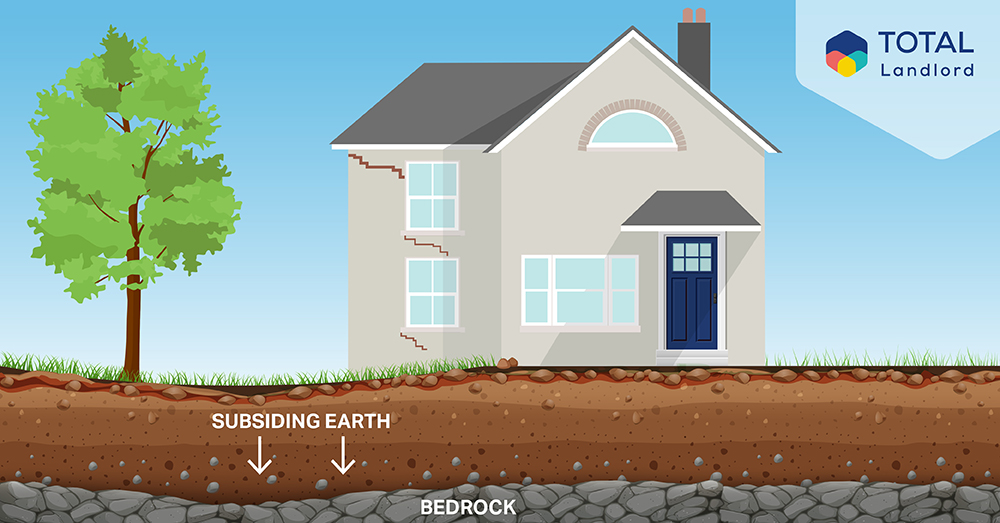
What is subsidence?
Discover exactly what subsidence is and what the causes are
Subsidence is when the ground beneath a property sinks, pulling the property’s foundations down with it.
This process can cause the walls and floors to shift, leading to cracks and potentially destabilising the construction of the property.
Subsidence can be caused by a range of things including clay shrinkage, trees growing close to the foundations, water washing away soil beneath the property, used or disused mines, formation of underground caverns and poor foundations.
Subsidence claims tend to come to light after extremely dry or wet spells, especially when they are due to soil types. This could be why we see a spike in subsidence claims during autumn.
Warmer weather is one of the most common causes of subsidence. As the ground below a property warms, clay-rich soil can shrink as the water trapped in it evaporates.
This causes the soil to shrink, leading to the downward movement of the ground above.
Trees may look harmless enough, but they can cause subsidence in two different ways.
Drawing water out of the soil can cause that soil to shrink – and a mature oak tree can draw up to 1,000 litres per day! Trees growing near to or under the foundations can also cause the ground to shift and become less stable.
Leaking drains, escape of water, flooding and heavy rainfall can wash away soil particles over time, causing the ground to slowly shift or become less stable.
Older properties often have shallower foundations than new builds. The use of the wrong materials in the foundations or not properly preparing the earth can also lead to foundations shifting below the property in new developments as well.
Damage caused by subsidence can be expensive to fix. In fact, at Total Landlord our most expensive claim last year for subsidence damage was an eyewatering £465,841.
Properties built over former mines or underground caverns may experience sudden collapses due to void formation
Excavation work near a property can disrupt soil stability, increasing subsidence risk
Drilling, piling, or demolition work can disturb the ground structure
Vibrations from nearby construction sites weaken foundation support over time
Subsidence
Escape of water
Fire damage
Storm / weather damage